© 2025. Houston Methodist, Houston, TX. All rights reserved.





In this
issue

WELCOME
NURSING SCIENCE


Nursing Science and Sustainable Nursing Practice: Reimaging the Future of Care
Article Review: The environmental awareness of nurses as environmentally sustainable health care leaders: a mixed method analysis
EDUCATION
Enhancing Hospital Supply Efficiency and Cost Savings Through Lean 5S Methodology
From Kaizen to Care: Building Sustainable Change at Houston Methodist Clear Lake
Transforming Supply Room Efficiency in Labor and Delivery: Utilizing Lean and A3 Problem Solving
PRACTICE
BMAT for Acute Care HMCL - Kaizen Project
Green ICU Initiative: Building a Sustainable Critical Care Environment
Sustaining the Nursing Workforce Through Residency Programs
PROFESSIONAL DEVELOPMENT
Empowering Nurses Through Mentorship: Building Resilience and Leadership from Within
Introducing Kahuna: A Tool for Elevating Clinical Excellence
MAGNET
Professional Governance at Houston Methodist Baytown
Improving the Efficiency of Annual Critical Care Nursing Competencies by Incorporating High-Fidelity Simulation
FROM OUR TEAMS
ABOUT DISCOVERN


EDUCATION
Enhancing Hospital Supply Efficiency and Cost Savings Through Lean 5S Methodology
By Renato Revilla, MSN, RN, CNN, MEDSURG-BC, CNE, Professional Practice Leader, Houston Methodist Hospital
By Renato Revilla, MSN, RN, CNN, MEDSURG-BC, CNE,
Professional Practice Leader, Houston Methodist Hospital
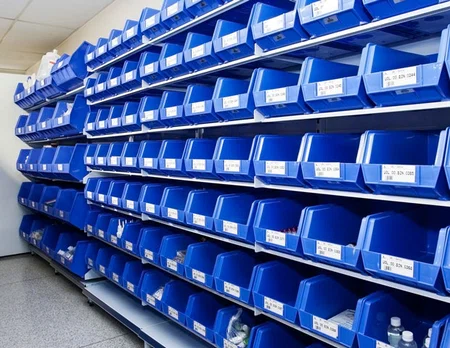
By maintaining clean, properly arranged and efficient supply rooms, hospitals can significantly reduce waste and save money. Lean 5S is one such strategy, where 5S stands for Sort, Set in Order (Straighten), Shine, Standardize and Sustain (Kubeck & Lee, 2025). This method helps staff remove unnecessary items, logically organize supplies and keep supplies easily accessible. The benefits are immediate, including cost savings and smoother workflows. For example, a medical-surgical unit team reorganized the supply room using 5S principles. They removed unnecessary or rarely used items, grouped similar supplies and clearly labeled storage areas. As a result, daily supply costs dropped by nearly 50% — from about $27,500 to $13,200 over four years. Eliminating 73 extra items also saved staff time, reduced reordering and improved efficiency (Kubeck & Lee, 2025). Similarly, in the Neonatal Intensive Care Unit (NICU), staff tested supply access before and after reorganization with a scavenger hunt. After implementation, search times dropped by nearly one minute, and accuracy improved from 47% to 87%. Removing expired or unused supplies resulted in savings of over $17,000. Supply rooms were color-coded, items labeled in large fonts and checklists added for regular upkeep — ensuring order even during staff transitions (Yaglowski, 2024).
Beyond time and cost savings, structured supply systems help hospitals control expenses during global price increases. Monitoring usage and adjusting reorder levels prevents overbuying, while just-in-time (JIT) ordering reduces excess inventory and waste. Sustainability efforts include diversifying suppliers and safely reusing single-use items, such as blood pressure cuffs and surgical staplers, thereby lowering costs and reducing environmental impact. Staff engagement is critical: training, accountability and sustainable practices foster a culture of continuous improvement at Houston Methodist. When staff are informed and involved, hospitals can optimize resources, streamline workflows and deliver better patient care — the ultimate goal of these strategies.
References: